Lean 5S & ERP: Driving Digital Lean, Data Discipline, and Operational Excellence
Learn how Lean 5S principles—Sort, Set in Order, Shine, Standardize, and Sustain—can be implemented within ERP systems to eliminate digital waste, improve data accuracy, standardise processes, and drive continuous operational improvement across modern organisations.
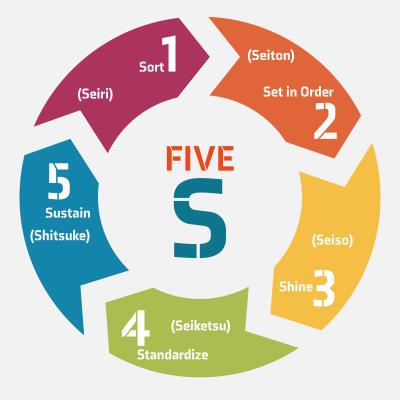
Lean 5S is a foundational methodology for creating organised, efficient, and disciplined workplaces. While it originated on the factory floor, its relevance today extends far beyond physical spaces. In modern organisations, the ERP system is the central workplace—where data is created, decisions are made, and processes are executed. Applying Lean 5S within an ERP environment is essential for achieving sustainable digital efficiency and operational excellence.

An ERP system that is aligned with Lean 5S principles becomes more than transactional software; it becomes a structured, reliable platform for continuous improvement.
Sort (Seiri): Removing Digital Waste from ERP Systems
The first step of Lean 5S is to identify and remove what is unnecessary. Within an ERP system, this involves eliminating digital clutter that adds no value, such as:
- Obsolete items, customers, suppliers, and price lists
- Redundant bills of material, routings, and inactive jobs
- Unused reports, fields, screens, and customisations
Just as unnecessary physical items slow down a workplace, unnecessary ERP data reduces clarity, increases errors, and undermines reporting accuracy. Sorting ERP data improves performance, simplifies user experience, and creates a clean foundation for planning, scheduling, and analysis.
Set in Order (Seiton): Structuring ERP Data and Processes
Once unnecessary elements are removed, remaining data and workflows must be arranged logically. In ERP systems, Set in Order focuses on creating structure and consistency through:
- Clear naming conventions and numbering systems
- Logical menu layouts and role-based dashboards
- Consistent document management and version control
- Defined workflows across sales, purchasing, manufacturing, and service
This structure ensures users can quickly find information, understand process flow, and perform tasks correctly the first time. A well-organised ERP system reduces training time, dependency on individual knowledge, and operational friction.
Shine (Seiso): Maintaining Clean, Accurate ERP Data
Shine is about keeping the workplace clean and identifying problems early. In ERP systems, this means maintaining accurate, validated, and reliable data. Key practices include:
- Regular data audits and exception reporting
- Monitoring negative inventory, invalid lead times, and pricing errors
- Ensuring shop floor, quality, and service data is captured correctly
- Cleaning historical data that no longer reflects reality
Clean ERP data improves trust in reports, dashboards, and KPIs. When data reflects what is actually happening in the business, managers can make faster and more confident decisions.
Standardize (Seiketsu): Embedding Best Practice into ERP Workflows
Standardisation is where ERP systems provide the greatest Lean advantage. ERP platforms allow organisations to define, enforce, and replicate best-practice processes across the business by:
- Standardising workflows and approval rules
- Using templates for BOMs, routings, quality plans, and jobs
- Applying consistent costing, inventory, and compliance rules
- Aligning ERP processes with quality standards and regulatory requirements
By embedding standards into the system, ERP reduces variation, prevents shortcuts, and ensures consistent execution—regardless of who performs the task or where it is done.
Sustain (Shitsuke): Making Lean a Habit Through ERP Discipline
The final step of Lean 5S focuses on discipline and long-term behaviour. Sustaining Lean within an ERP system is achieved by:
- Training users to follow structured, system-driven processes
- Using dashboards, alerts, and KPIs to reinforce accountability
- Auditing compliance and data quality regularly
- Continuously refining ERP processes as the business evolves
ERP systems support Sustain by making correct behaviour the default. Instead of relying on memory or manual controls, the system guides users, enforces rules, and provides ongoing visibility into performance.

ERP as a Platform for Digital Lean and Continuous Improvement
When Lean 5S principles are fully integrated into an ERP system, the result is a scalable and sustainable approach to operational excellence. ERP becomes the digital backbone that:
- Eliminates digital waste and inefficiency
- Improves data accuracy and process visibility
- Supports Lean manufacturing, distribution, and service operations
- Enables continuous improvement across the entire organisation
Lean 5S organises how people work.
ERP organises how the business runs.
Together, they transform Lean from a local initiative into an enterprise-wide discipline that delivers lasting value.